
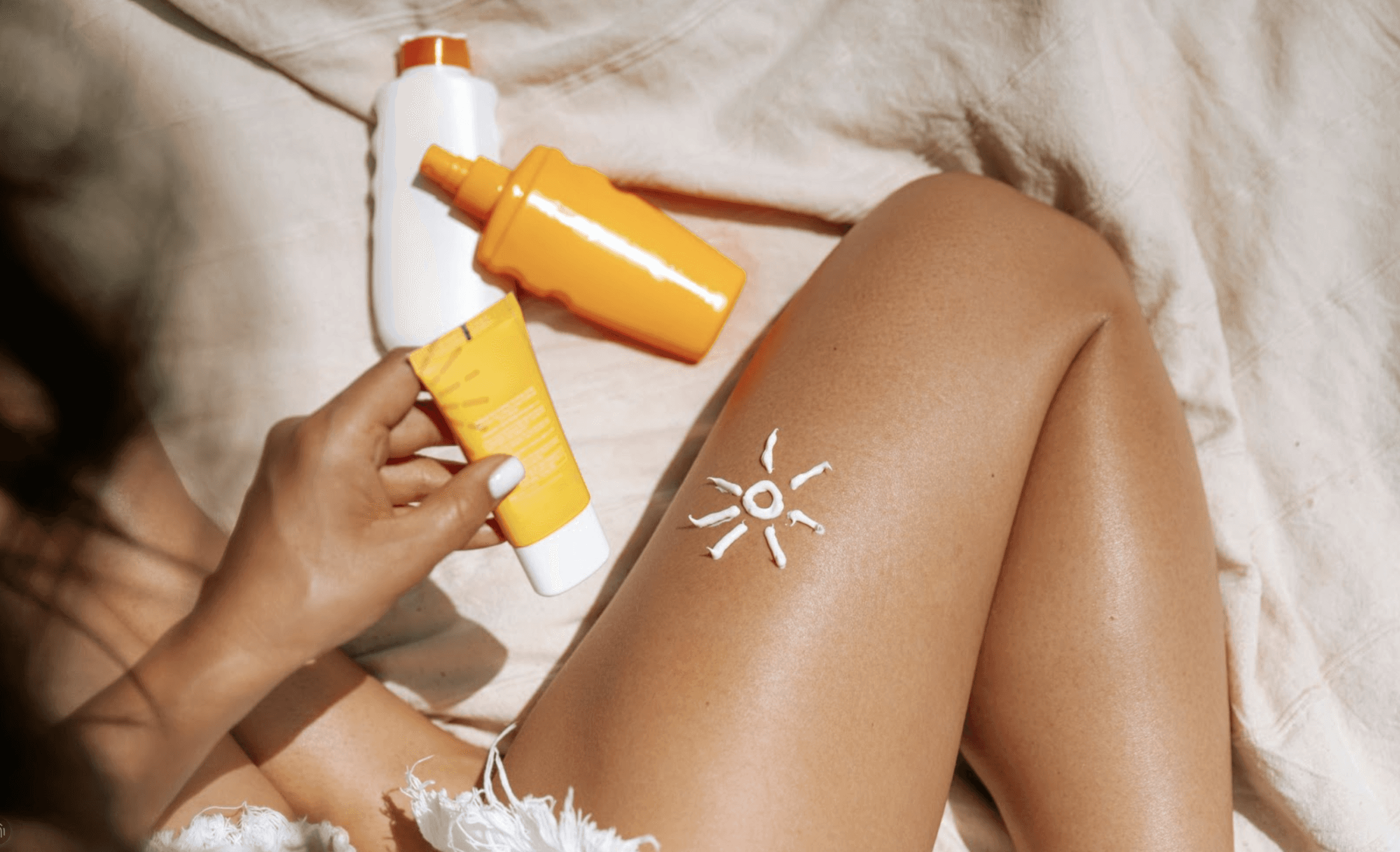
Look for three features: SPF 30 or higher, protection against both UVA and UVB, and water resistance. Choose a product you are comfortable applying generously. A higher SPF does not remove the need to reapply it. AAD guidance on choosing sunscreen.
What to check on the label
SPF mainly describes protection against UVB. Also check the UVA protection label; European products may carry UVA inside a circle. Check the expiry information and the manufacturer’s directions. NHS guidance on sunscreen labels and shelf life.
How to apply sunscreen at the beach
Apply before going into the sun, following the product instructions.
Cover all exposed skin, including ears, neck, tops of feet and hard-to-reach areas.
Use enough. The AAD suggests at least about 30 ml for most adults to cover exposed body skin; the amount also depends on body size and clothing.
Reapply every two hours outdoors and after swimming or sweating.
Does water resistant mean waterproof?
No. Sunscreen can wash or rub off. Water resistance does not provide all-day protection without reapplication. Reapply after swimming and towel drying, following the label. FDA explanation of water resistance.
What else protects your skin?
Seek shade and use clothing, a hat and sunglasses. Check the local UV index and reduce direct sun exposure when sunlight is strongest. Sunscreen should not be used to extend time in the sun. WHO guidance on UV protection.
How does sun protection relate to mole checks?
Checking your skin does not replace UV protection, and sunscreen does not replace medical assessment of a suspicious change. Contact a doctor if a mole changes, itches or bleeds. NHS guidance on changes in moles.
If you are considering mole mapping in Bratislava, compare SKYN’s prices and service inclusions. Both options involve an in-person scan; they differ in how the doctor subsequently assesses the images.